Why Does the Sun Fade Tattoos?
Tattoo pigment is placed into the dermis, the deeper layer of your skin. That makes tattoos permanent, but it doesn't make the pigment immune to damage.
Ultraviolet radiation from the sun damages skin and contributes to the gradual breakdown and alteration of tattoo pigment. Over years of repeated exposure, tattoos can lose some of their original contrast and clarity.
This is especially noticeable in detailed work.
In black-and-grey realism, for example, a tattoo depends heavily on subtle transitions between black, grey, and open skin. If those softer values lose contrast over time, some of the depth and separation that made the tattoo look realistic can become less noticeable.
A tattoo isn't going to disappear because you spent an afternoon outside. Think of sun damage as something that accumulates.
One unprotected day isn't the same as years of unprotected Florida summers.
That's why good long-term habits matter.
Find your direction in the Sonder Studio portfolios, or send us your tattoo idea to start planning.
The First Few Weeks: Your Tattoo Is Healing
A fresh tattoo should be treated like healing skin, because that's exactly what it is.
During this stage, your goal isn't sunscreen.
Your goal is to keep the tattoo clean, allow the skin to heal properly, and keep it away from things that can irritate or contaminate it.
Keep a Fresh Tattoo Out of Direct Sunlight
This is especially important in Florida.
Don't put a fresh tattoo in direct sunlight and assume sunscreen makes it safe. Sunscreen is intended for intact skin, not a fresh tattoo that is still healing.
Instead, avoid direct sun exposure while the tattoo heals.
If you have to be outside, use shade and loose, clean clothing to protect the area when practical. Don't wrap it tightly in something that traps excessive heat and sweat.
If you've just had a large forearm tattoo done, for example, the next afternoon probably isn't the best time to spend four hours on a boat with that arm sitting in direct sunlight.
Give it time.
Plan for the days that follow with our tattoo aftercare guide.
Don't Go Swimming
This includes:
- Pools
- Hot tubs
- Lakes
- Rivers
- The ocean
- Any situation where the tattoo will be submerged for an extended period
A quick shower is completely different from soaking a healing tattoo.
Pools introduce chemicals and shared water. Natural bodies of water introduce microorganisms and other contaminants. Neither is something you want sitting against freshly tattooed skin.
This can be frustrating in Florida because swimming is part of everyday life for a lot of people.
If you know you're getting tattooed before a vacation, cruise, beach weekend, or pool party, plan accordingly.
Sometimes scheduling the tattoo for after the trip makes much more sense.
Sweat Matters Too
You don't need to sit completely still for two weeks, but be smart about heavy sweating during the early healing period.
Florida heat can make this difficult even without exercising.
If you're working outside, going to the gym, or doing something that leaves the tattoo soaked in sweat and rubbing against clothing, you're creating unnecessary irritation.
The location matters too.
A forearm tattoo during a light walk is different from a fresh thigh tattoo rubbing against tight shorts through an hour-long workout.
During the initial healing period, give the skin a chance to settle down before jumping straight back into intense activity involving that area.
Keep It Clean, but Don't Overdo It
Follow the aftercare instructions your artist gives you, particularly if you're using a protective adhesive bandage.
Once you're washing the tattoo normally, use clean hands, lukewarm water, and a gentle cleanser recommended for tattoo aftercare.
You don't need to scrub it.
Pat it dry rather than aggressively rubbing it with a towel.
A tattoo doesn't heal better because you wash it twenty times a day. Too much washing and irritation can be just as counterproductive as neglecting it.
Keep it clean, then leave it alone.
Don't Pick at Peeling Skin or Scabs
At some point, your tattoo may start looking a little ugly.
That's normal.
It can become dry, flaky, itchy, or slightly dull-looking while the surface heals.
Don't panic and don't start picking.
Let peeling skin come off naturally. Pulling at flakes or scabs before they're ready can irritate the area and potentially affect how portions of the tattoo heal.
If it itches, resist the urge to scratch it.
Don't Drown It in Lotion
More moisturizer isn't necessarily better.
If your artist has instructed you to moisturize the tattoo, apply a small amount of an appropriate product and rub it in gently.
You don't want a thick layer constantly sitting on top of the skin.
Your tattoo shouldn't look like it has been frosted like a cake.
A little goes a long way.
When Can I Start Putting Sunscreen on My Tattoo?
Wait until the tattoo is fully healed before applying sunscreen directly over it.
There isn't one exact day that applies to every person and every tattoo. Healing time varies depending on the tattoo, placement, your skin, and how your body heals.
The surface should be completely closed and back to normal—no scabbing, open areas, active peeling, or raw skin.
If you're unsure whether yours is ready, ask your tattoo artist rather than guessing.
Once it is completely healed, sun protection becomes one of the best long-term habits you can develop.
After It's Healed: Protecting Your Tattoo for Years
Once your tattoo is healed, the goal changes.
Now you're trying to protect both your tattoo and your skin from repeated UV exposure.
Use Broad-Spectrum Sunscreen
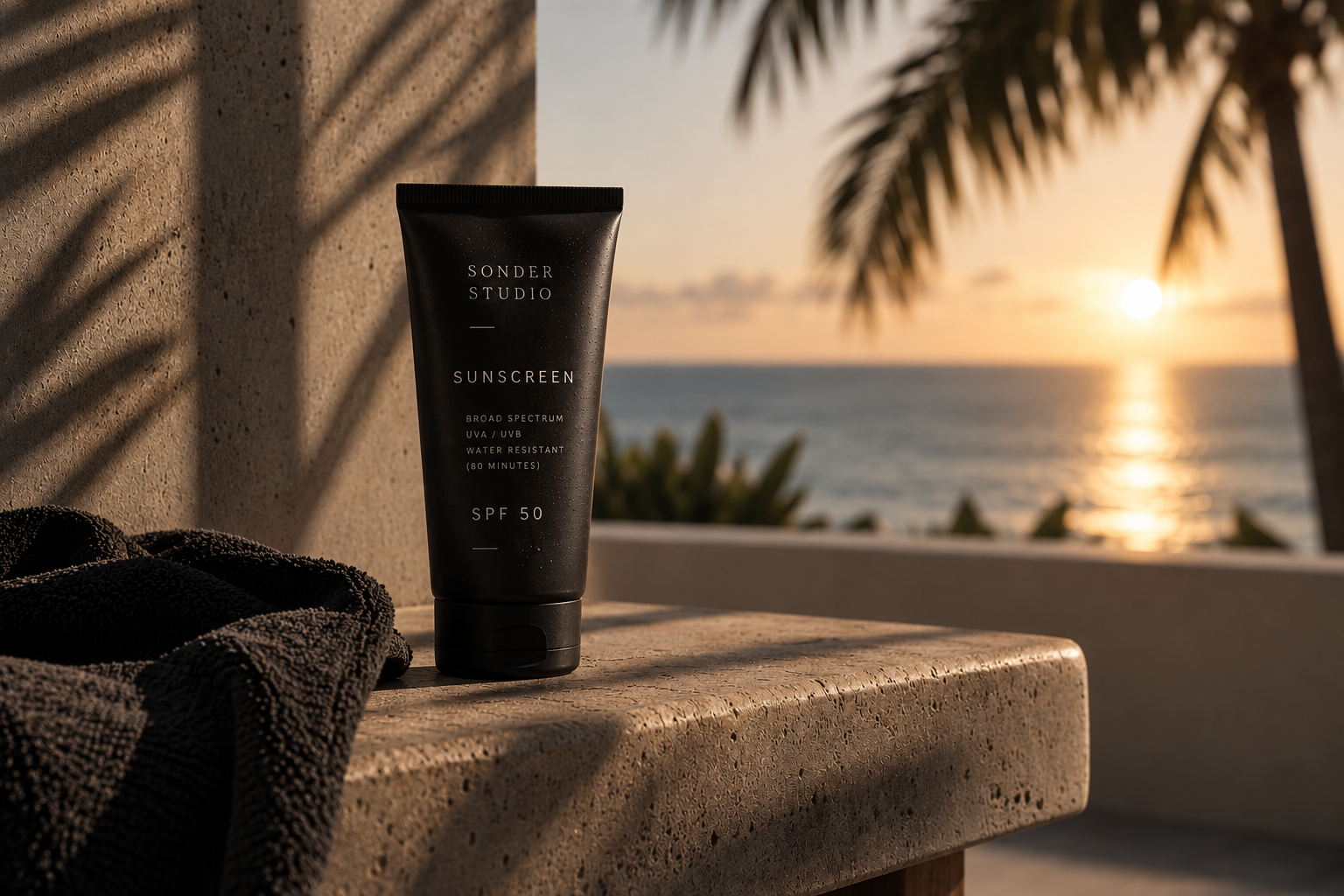
Choose a broad-spectrum sunscreen that protects against UVA and UVB radiation.
For outdoor use, SPF 30 should be considered the minimum. SPF 50 or higher is a practical choice when you're spending significant time in the Florida sun.
And don't just put it on once at 9 a.m. and assume you're covered for the entire day.
Sunscreen needs to be reapplied, particularly after swimming or heavy sweating. Follow the directions on the product you're using.
This matters even more at the beach, on a boat, at an outdoor sporting event, or anywhere you'll be outside for hours.
Clothing Is Even Better When You Can Use It
Sunscreen is useful, but physically covering the tattoo can provide another layer of protection.
If you're going fishing all day, working outside, or spending hours in direct sunlight, lightweight UV-protective clothing can be a great option.
You don't have to hide your tattoos every time you leave the house.
The point is to recognize the difference between normal everyday exposure and spending six straight hours baking in Florida sun.
Don't Forget About Tattoos While Driving
One of the easiest forms of sun exposure to overlook happens in your car.
If you drive frequently with one arm near the window, that arm can receive repeated UVA exposure over time.
You might never get a dramatic sunburn from it, so it doesn't feel like a problem.
But tattoo maintenance isn't only about preventing sunburn. It's about reducing cumulative UV exposure over years.
If one arm is constantly exposed during long drives, sunscreen or protective clothing is worth considering.
A Tan Isn't Protecting Your Tattoo
Some people assume that once they're tan, their skin is accustomed to the sun.
A tan is actually a sign that your skin has responded to UV exposure.
The same goes for tanning beds. Artificial UV exposure can contribute to skin damage and isn't a safe workaround for protecting tattoos.
If keeping your tattoo looking its best is the goal, intentionally tanning it works against you.
What If My Tattoo Gets Sunburned?
If the tattoo is fully healed, treat the sunburn like you would sunburn elsewhere and keep the area protected from additional sun while it recovers.
If a fresh tattoo gets significantly sunburned, contact your tattoo artist for guidance. Depending on how severe the burn is, medical care may also be appropriate.
Blistering, significant swelling, worsening pain, spreading redness, drainage, fever, or other signs that something isn't right shouldn't simply be written off as "normal tattoo healing."
When in doubt, get it checked.
Can an Old, Faded Tattoo Be Fixed?
Often, yes.
Depending on the tattoo, an artist may be able to bring back contrast, strengthen certain areas, or rework portions that haven't aged well.
But preventing unnecessary fading is much easier than repeatedly repairing it.
A well-done tattoo that is cared for properly can age beautifully.
It won't look exactly the same at 50 as it did the afternoon you got it at 25. Your skin changes, your body changes, and tattoos naturally settle into the skin over time.
The goal isn't to freeze your tattoo in time.
The goal is to give it the best chance of aging well.
The Florida Tattoo Care Rule
If you remember nothing else from this article, remember this:
Fresh tattoo: keep it clean, don't soak it, don't pick it, and keep it out of the sun.
Healed tattoo: sunscreen, shade, and clothing are your friends.
You invested money, time, and a fair amount of discomfort into getting your tattoo. Protecting that investment takes a few extra seconds before heading outside.
Here in Florida, those few seconds matter.
Your tattoo artist can control how your tattoo looks when you leave the studio.
How it looks ten years later is something we work on together.